

The Summer of ’26 was a season of great victory for those in the melanoma community and everyone – lest we forget we all have skin!
 A MELANOMA VACCINE!
Just announced, a vaccine is in development for late-stage melanoma! Keep in mind, it is not a traditional vaccine to be added to your wellness routine to prevent melanoma from ever developing. Instead, it is only for those patients who have undergone melanoma surgery to prevent a recurrence of the cancer.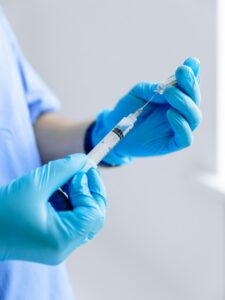 Based on mRNA COVID-19 research, the immunotherapy vaccine is called Intismeran, and has been developed by Moderna and Merck. When combined with Keytruda, it reduced the risk of melanoma returning by 49%. The treatment is personalized as doctors take a tissue sample from a patient’s tumor, and then the mRNA shot teaches the immune system to spot and destroy those exact cancer cells. Intismeran is still in development, a major Phase 3 trial, but it is expected on track for full approval. Of course with that comes hope that the future may offer an overall vaccine for melanoma and other cancers thanks to the discovery of mRNA and research.
BUT WAIT! THERE’S MORE!
Just weeks earlier, years of advocacy and determination by a collection of melanoma nonprofits, patients, and families, along with the international melanoma research community, finally resulted in victory as a stubborn FDA opened the door to new treatment for those with late-stage melanoma. 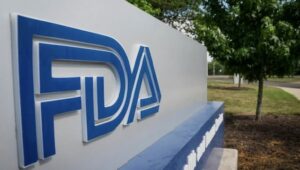
While those previously diagnosed with Stage 4 melanoma, such as Claire, have typically faced a 20% chance of surviving one year, the approval of Tudriqev ( formerly known in development as RP-1), now offers new promise as an immunotherapy. When combined with Opdivo, studies showed that nearly 84% of the responding patients gained three years of life with their family and friends with minimal side effects. The Claire Marie Foundation has been proud to be part of this victory by joining in the fight with other melanoma nonprofits.
As Claire’s mom, CMF Co-Founder and CEO Marianne Banister not only testified before the FDA Advisory Panel, but also submitted a letter of record as to the importance of this drug to young people. Her letter is attached below. At CMF we feel this is a huge part of our mission of saving other young people from the heartache of losing Claire. It takes a village. Thanks to all who have joined us in this work, thank you for your dedication and for honoring Claire and her legacy of joy, color, beauty – and hope.
To: US Food and Drug Administration
From: Marianne Banister Wagonhurst
Co-Founder / CEO
Claire Marie Foundation
July 20, 2026
This October 16th will mark 12 years since we watched our beautiful 17-year-old
daughter Claire Wagonhurst succumb to the brutality of adolescent melanoma. No one
could prepare us for the emotionally and mentally shattering effect of watching our child
take her last breath, knowing it all could have been prevented had she been granted
access to life-saving drug therapies.
An athlete, artist, and vibrant young woman, we could only watch as Claire withered
away, becoming blind and immobile, a mere shell of herself. Claire would most likely be
with us today had she been granted access to trials for one of two drugs, both of which
have now become routine in melanoma care: Opdivo and Keytruda. Despite campaigns
on her behalf from her oncologist at Johns Hopkins and Senator Barbara Mikulski of
Maryland, Claire was denied access because she was not yet 18 years of age. Her
teenage body was mere months away from that of a “full adult” in trial terms, but the
answer was still no.
Ironically, a few months later, after Claire’s melanoma had advanced to her brain with
leptomeningeal disease, Keytruda was approved in July of 2014. Claire was one of the
first in the country to gain access to the drug; her age was no longer a factor. Our
oncologist was excited, deeming Keytruda’s impact significant and even “miraculous,”
but it came too late. Too late. Too late. Much, much too late. Claire passed three
months later.
Our family established the Claire Marie Foundation in honor of Claire, with the mission
of preventing melanoma in adolescents and young adults. It is a population ignored and
misunderstood by the medical community, even though melanoma is statistically at
“epidemic proportions”. Melanoma is the second most common cancer in
adolescents. It is the number one cancer in young adults under 30. It is the most
common cause of cancer death in young women aged 25-30. And, as in Claire’s
case, it can be triggered by hormonal changes of puberty and even pregnancy. But what
is essential to understand when it comes to the topic at hand of FDA drug approval is
this: melanoma in young people is more aggressive and more invasive than in
older adults, per a study by Johns Hopkins in 2014. There is no time to waste.
Allow me to restate more clearly. Adolescents and young adults diagnosed with a Stage
3 or Stage 4 melanoma, cannot wait for the FDA to reboot. Melanoma is an absolute
beast in the young body.
Replimune’s RP-1 may be the only thing to save them. By changing the rules at the 11th
hour, by denying access to this life-saving drug which has been well proven to be both
safe and effective, the FDA may as well sign their death orders. It is an unconscionable
and irresponsible act.
I offer a thought for consideration. In the English language, we have a word for
someone who has lost a spouse: widow or widower. We have a word for someone who
has lost their parents: an orphan. We do not have a word for someone who has lost a
child or a sibling. Perhaps because we simply cannot wrap our minds around the
concept. It’s too horrifying. Trust me. It is the most unfortunate of clubs. As a leader,
may you make the wise decision to grant approval and thus save other young people,
parents, siblings, and families from my fate.
Marianne Banister Wagonhurst
Co-Founder / CEO / Claire’s Mom
Claire Marie Foundation
marianne@clairemariefoundation.org
410-274-7938
www.clairemariefoundation.org
Federal 501 (c)-3 Tax ID #82-4164418