
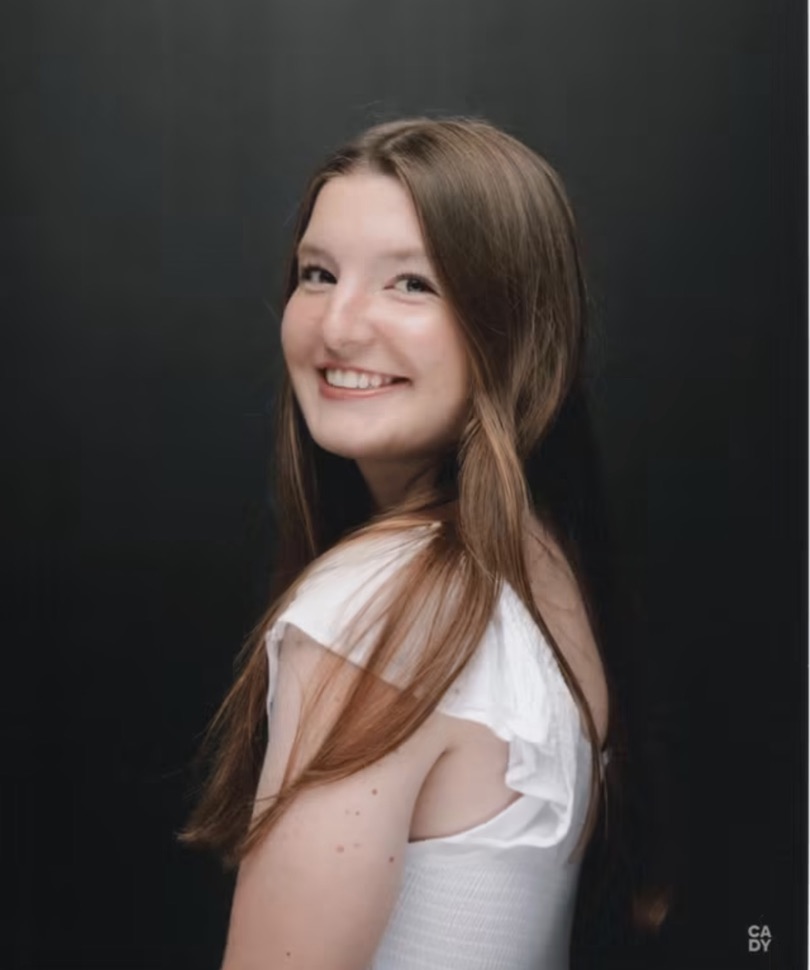
The following is from the desk of Marianne Banister, CMF Co-Founder / CEO and Claire’s Mom.
Have you ever met a stranger only to find you are kindred spirits? More often than not, I discover that when another mom or dad reaches out after losing a child to adolescent melanoma. Sadly, it’s our unwanted membership in “The Most Unfortunate Club” that binds us through all those “you too?” moments we share. But a recent conversation with a lovely couple from Loganville, 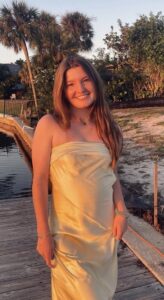 Georgia touched my heart beyond words as they shared their beloved daughter’s story. Because as much work as we have accomplished in the last 12 years to raise awareness of adolescent and young adult melanoma among families and the medical community, they revealed their daughter faced many of the same roadblocks as Claire, while choosing to live her life in a similar way with shared interests. Their 19-year-old daughter “ Izzy”, Isabella Grace Sause, left an indelible, wonderful imprint on the many hearts around her when her melanoma journey ended August 30th. The more I heard, the more astonished I became at the similarities between Izzy and Claire; both in their melanoma battles and the shared gift they gave to those they loved and left behind.
 If you are unfamiliar with Claire’s story, indulge me to share why Izzy’s story hit so close to home. In the days following Claire’s passing, her multitude of friends shared their amazement at how Claire remained undaunted and enthusiastic to live a full life up until the very end. bit.ly/3YiGVO6
Her zest for living despite melanoma inspired Claire’s classmates and friends. She taught them that even when the world seems to be crashing down, there’s always something to smile about, to laugh about, to celebrate. That’s why her friends started the #livelikelikeclaire hashtag.
Well, now, there is another hashtag #livelikeIzzy. And it’s time to share her story. Izzy was a young woman who despite all the odds, embraced every day, every moment, with courage, strength and pure joy.
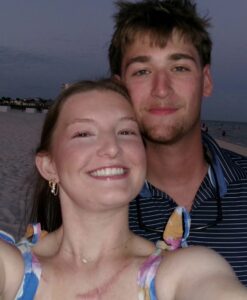
Izzy was just 17 years old, a junior in high school, when a mole on her chest was diagnosed as melanoma. A powerhouse forward in soccer, melanoma was the last thing on her mind. Izzy’s focus? Being a teenager. She always brought the fun. Izzy was a magnet for friends, her infectious laughter so intoxicating it would bring people together. She loved music, especially when she could blast it from her room, her car or soak it up in her “happy place” the beach. But Izzy was also a dedicated student and athlete. Soccer was everything. She played since she was four, moving onto club and varsity with the ultimate goal of making her way to a college team.
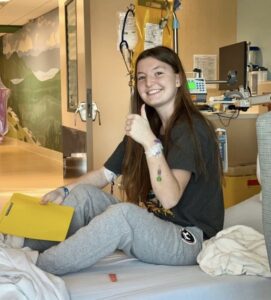
As with Claire, Izzy and her parents found the medical community to be ill-informed when it came to adolescent melanoma. Pathologists were slow to diagnose, due to her young age. As with Claire, she was denied access to clinical trials because she was not yet 18 ( as if one year would make a difference in her biology). And, as with Claire, the melanoma was unrelated to sun exposure. For Izzy, it was a matter of genetics and perhaps hormonal influences.
Through it all, every brutal drug therapy, every surgery, Izzy didn’t miss a beat; powering through classes, she remained her happy, enthusiastic self, preferring to spend time with her team and friends while constantly adapting to her ever-changing physical needs and medical requirements. Despite exhaustive treatments and surgeries, Izzy trained hard until she was recruited to play soccer at Georgia College and State University where she joined her older sister Savannah.
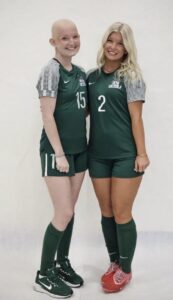
Her melanoma experience fueled a desire to study pediatric nursing. Izzy was fully engulfed in college life, studying, playing, parties and even falling in love. As with Claire, the melanoma eventually spread to Izzy’s spine and brain in the form of leptomeningeal disease, forcing her to pack up and leave college. Even that didn’t dim her spirit.
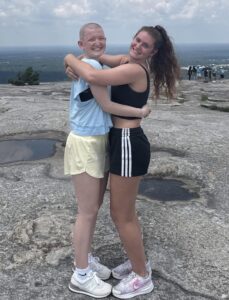
In May, facing whole-brain radiation, Izzy decided it was the perfect time to hike up Stone Mountain State Park in Georgia; not an easy task with its 825-foot elevation. In July, a month before her passing, she sprung herself from a hospital bed, excited to celebrate a girls night out at the Ariana Grande Concert in Atlanta where she and a friend sang and danced the night away.
Then, just as her sister and the rest of her team were gearing up for their first game of the season, Izzy was told it was time for hospice. Her melanoma journey and life were coming to an end.
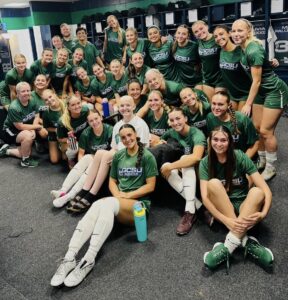
Izzy decided she had one more celebration to enjoy. Izzy told her parents to pack up. She was going to GCSU’s soccer season opener! Somehow, Izzy found the strength in her weakened legs to walk into the locker room, determined to surprise her team, beaming ear to ear. With tears of sheer joy and excitement, she joined the team on the bench, cheering the Bobcats to a 5-0 win over North Greenville, including Savannah’s goal, the first of her college career. It was a magnificent day!
Back home, three days later, surrounded by love, tucked into her childhood bed, Izzy drew her last breath. Hers was a life too, too short, but so very well lived. Izzy leaves behind so much love, inspiration, and a reminder that every day is a gift to be treasured.
I like to think Izzy and Claire have found each other, with lots to chat about these days. If I close my eyes, I can just imagine their whispers and bubbling laughter; the music most likely blasting away.
My thanks to Chris and Mandi Sause for trusting me with Izzy’s story and for choosing the Claire Marie Foundation as Izzy’s memorial recipient.
#livelikeIzzy #livelifelikeclaire

 A MELANOMA VACCINE!
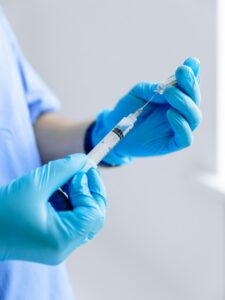 Based on mRNA COVID-19 research, the immunotherapy vaccine is called Intismeran, and has been developed by Moderna and Merck. When combined with Keytruda, it reduced the risk of melanoma returning by 49%. The treatment is personalized as doctors take a tissue sample from a patient’s tumor, and then the mRNA shot teaches the immune system to spot and destroy those exact cancer cells. Intismeran is still in development, a major Phase 3 trial, but it is expected on track for full approval. Of course with that comes hope that the future may offer an overall vaccine for melanoma and other cancers thanks to the discovery of mRNA and research.

 Here’s some food for thought: Nearly 400,000 children and adolescents will be diagnosed with cancer globally this year. That means every three minutes, a parent is told their child has cancer. Trust me. No one can imagine nor prepare for the moment. There is simply the before and the after. Life is never the same. Still, there is so much more hope for young patients, since we lost Claire nearly a dozen years ago. That is due in great part to the advocacy and commitment of researchers and to those who scramble to find funding, who make it all happen. But times are hard.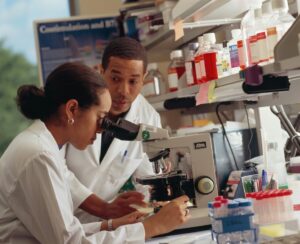
 Dr. Robyn Gartrell, M.D., a Pediatric Oncologist and Research Physician with Johns Hopkins University School of Medicine, finds frustration in the fact that children are often eliminated from drug trials under the assumption that their systems are too sensitive, and the drug therapies could do more harm than good. In fact, Dr. Gartrell has found that the children can actually fare much better. “I’ll say, children have a higher tolerance and often survive what adults can’t. Case in point is CAR T Cells. Adult patients died from the immune response called cytokine release syndrome and while it is scary in children too, they often survive with fantastic supportive care as their bodies can handle things adults can’t.'” When asked why she keeps fighting the good fight, Dr. Gartrell says it is all about hope: ” Providing a drug to a child with a terminal cancer that allows them to not only plan for but go to college is an unreal feeling.”