

When it comes to health, it seems everyone is looking for the next best thing! Some advances can save pain and money. Others may score high on the “hot tech” meter, but fall short in effectiveness. What works and what doesn’t, when it comes to tech in melanoma diagnosis? In this episode, Dermatologist and Medical Advisor to the Claire Marie Foundation, Dr. Diane Orlinsky, M.D., helps us sort it all out!

The Margarita Burn and Other Hidden Sun Risks
 Well, here’s a disturbing thought: One standard drink increases your risk of developing melanoma by about 20%. So, if you drink five beers, you’ve just increased your risk by 55%. Now, make that drink a margarita and you could really be in trouble; at least when it comes to the sun! Medically speaking, it can cause a severe sunburn, better known as a Margarita Burn, or phytophotodermatitis.
Any form of alcohol and certain foods change your skin on the cellular level, making your skin more photosensitive to UV rays.
Juice from limes and other citrus, plus veggies such as celery, parsley, cilantro, figs, and carrots, enhances your skin’s sensitivity. The best plan is to avoid eating and cooking with these foods on sunny days or to at least wash your hands and arms thoroughly to remove any juices or oils. bit.ly/49cV7NF
Also, a reminder to check your medicine cabinet before you head into the sun for the day! Lotions, perfumes, prescription medications, and some over-the-counter medications can all increase the extent of damage to your skin.
Avoid the following or take extra precautions when using:
- Acne and Skin care medications with alpha-hydroxy acids, accutane or retinol.
- Antibiotics doxycycline, tetracycline, ciprofloxacin, levofloxacin, ofloxacin and trimethoprim.
- Non-steroidal anti-inflammatory drugs such as ibuprofen and naproxen; found over the counter in medications such as Advil, Aleve and Motrin.

- When it comes to skin care, avoid body scrubs or exfoliants before enjoying the sun. And perfume can be an issue too. Consider skipping your favorite scent for a couple of days. Even natural essential oils, such as sandalwood and lavender, can cause skin sensitivity when exposed to the sun.
Now, before you decide to spend the summer in a cave, understand none of this means you have to miss out on the fun of the season! Just avoid what you can, slather on SPF 30 sunscreen every two hours, and wear UPF 50 clothing! A cautious approach adds up to more days in the sun and a lifetime of healthy skin! Like your mom always says: “Make Good Choices!” You can learn more about the hidden risk of sun damage in our June 2nd episode of An Unexpected Life podcast. We are joined by Dermatologist, Dr. Eva Simmons-O’Brien! You don’t know what you don’t know when it comes to sun safety! You can find it with all your favorites or via this link!

New Tech and the Reach of AI In Melanoma Detection and Treatment
So much has changed in the world of melanoma detection and treatment since Claire was diagnosed as a 14-year-old in 2011. Today, there are better, less toxic treatments and more precise tools available to help detect melanoma and other skin cancers at the very earliest stage.
With the surge in AI, there is plenty of buzz about new and exciting diagnostic technologies today. To sort through it all, we are looking past the hype. What works? What doesn’t when it comes to tech and melanoma?
We tapped into the expertise of one of our top Medical Advisors, Dr. Diane Orlinsky, M.D., Board Certified Dermatologist, Assistant Professor of Internal Medicine at the Johns Hopkins University School of Medicine and a Fellow of the American Academy of Dermatology.
She, and others on our CMF Medical Advisory, recommend above all else, you find your person; your dermatologist. A well-trained medical professional who uses dermascopy to fully examine your naked skin, head to toe, every year. Over time, that dermatologist will know if your moles change and if there are any new ones. That is your baseline of skin health. But there are still new developments to be excited about! Time to dive in!
DecisionDx-Melanoma
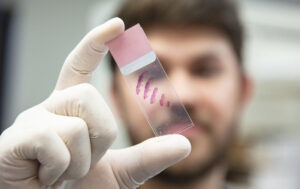
A game changer! Created by Castle Biosciences, DecisionDx-Melanoma is a “gene expression profile test that provides comprehensive, personalized results to guide risk-aligned management decisions for patients with stage I-III cutaneous melanoma.” In other words, once a melanoma is diagnosed, DecisionDx-Melanoma captures personal, genetic information from the tumor to predict its aggressiveness and the risk of it spreading further through the body. This insight can offer oncologists the option of avoiding sentinel lymph node biopsies, which can often be quite painful. Dr. Orlinsky gives DecisionDx- Melanoma high marks. “ I look at it as another tool in my tool box”. She says its accuracy helps her best guide her patients in their decisions going forward. DecisionDx-Melanoma is the only melanoma prognostic test associated with improved survival and is highly recommended by patients and professionals.
AI Powered Handheld Scanners
So cool! Devices like DermaSensor are FDA-approved and use spectroscopy and AI to analyze a lesion in seconds and detect the risk of melanoma or other skin cancers. It has proven to be 96% accurate. This is huge news for patients in rural areas with limited access to dermatologists but at great risk for sun damage. What Dr. Orlinsky finds exciting about this is it’s accuracy and the fact that patients in remote areas can get a first look that was never available before. By using DermaSensor, a general practitioner can assess the initial risk of skin cancer or melanoma and then refer the patient to a dermatologist for a final exam using dermoscopy and if needed, biopsy.
3D Body Mapping & Automated Imaging:

Systems like Vectra WB180 use 26 cameras to create a 3D avatar, tracking every mole over time to detect minute changes, which reduces unnecessary biopsies. The challenge to this system is cost. It is too expensive for private dermatologists to utilize and often results in false positives, resulting in patient anxiety and unnecessary biopsies. Additionally, it carries high out-of-pocket costs as insurance may not always cover it. For that reason, Dr. Orlinsky advises skipping this system and finding a dermatologist who uses their own expertise and dermascopy training for annual screenings. She says it also makes it easier to get a second opinion if desired, with consistency and better access.
Non-Invasive Genomic Testing: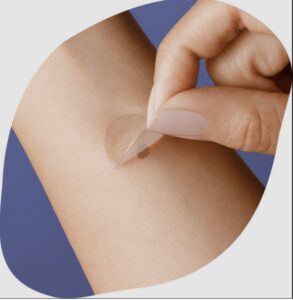
There are two tests on the market under this category. The first is from DermTech.It has created a test that allows doctors to use adhesive patches to collect skin cells from the surface of a patient’s skin or a mole for genetic analysis. The belief is that, with this genomic marker analysis, melanoma can be diagnosed without a surgical biopsy.
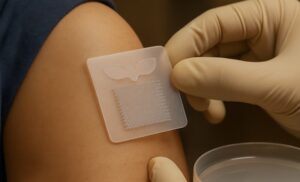 And taking the next step is ExoPatch, currently being tested by researchers at the University of Michigan. This tiny patch has micro needles that capture biomarkers in the top layer of the skin’s epidermis. Researchers say by using this, no biopsy is needed and it can be done at home.
Dr.Orlinsky says the risk with both of these products is that melanoma cells can develop deep within the layers of the skin, beyond what can be detected at the surface. A board-certified dermatologist, equipped with dermoscopic tools, is trained to evaluate cellular patterns that cannot be seen with the naked eye nor detected by an adhesive patch on the skin. If the melanoma is detected at the surface of your skin, you may already have a problem. Remember, if found early, melanoma is 98% treatable. And the “at-home” testing is especially problematic. Never try to diagnose your own skin issues, especially when it comes to cancer. 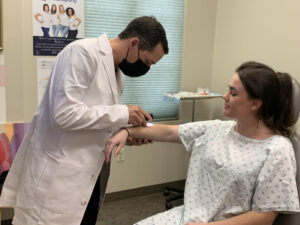
As always, if you have any questions or concerns about your skin, count on your medical team. If you have been diagnosed with melanoma or other skin cancers, make sure your dermatologist, oncologist and other medical professionals are all in the loop. You need a village and a team! It can make all the difference!

Up Your Skin Game! Why Young Athletes Are At Special Risk for Melanoma
 It often starts in the little ones; as early as 5 years of age. They learn to swing a bat, serve in tennis, pass a football, kick a soccer ball or cradle in lacrosse. Over the years, their time on turf, courts, and grass will increase as will their exposure to the damaging rays of the sun. On average, the NCAA outdoor athlete will spend 1,200 hours a year in the sun. But that doesn’t even account for the years before college.

Over 3.5 million skin cancers are diagnosed in the U.S. each year and young people are especially targeted. Not only due to sun exposure but special risks related to hormonal changes and genetics
Melanoma—the deadliest type of skin cancer—is the most common form of cancer among young adults ages 25-29, and the second most common among ages 15-29. It’s the number one cause of cancer death in women 25-30.
Additionally, there are aspects to life as an athlete that add to the risk of melanoma. For instance: sweating.
It increases the skin’s sensitivity to ultraviolet radiation. Anti-inflammatory medications such as Advil or Aleve, often used for muscle pain, as well as acne medications and antibiotics, can increase the skin’s likelihood of burning.
What to do? Just be extra cautious!
Start with sunscreen: Apply a broad-spectrum liquid sunscreen with SPF 30 or higher and reapply every 2 hours or after swimming. Be generous and rub it in! Do not use spray sunscreens, as they do not penetrate the skin’s layers. Here’s a hint: stash it in your cooler for easy access when hydrating!

Wear UPF 50 clothing: Regular team uniforms, hats, and gear will only stop 6% of the damaging rays. You can actually burn through your clothing! UPF50 will block 98% of the sun’s damaging rays, so cover up with sun-safe gear when you can. That goes for the team tent too! Unless it’s made of UPF50 fabric, it offers little protection.
Tag-Team Protection: Many dermatologists, including those with the Claire Marie Medical advisory, recommend using a polypodium plant derivative. In short, an herbal supplement that can help to protect the skin from sun damage. It is NOT a replacement for sunscreen, but it’s another tool to enhance skin protection on those long days in the sun. As always, check with your physician or dermatologist to make sure it’s right for you.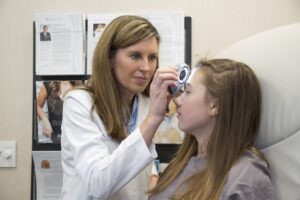
Know your skin: Get a full-body skin screening every year from a dermatologist who uses dermoscopy. Then, keep an eye out for any new moles or unusual changes to existing moles. If you see anything, see your dermatologist asap. In young people, melanoma can change very quickly and be quite aggressive. But, if found and removed early, it is 98% treatable.
Remember, there is nothing keeping you from living a vibrant, active life. Just up your skin game! Take care of you! Take care of your skin! #LiveLifeLikeClaire

Why is Melanoma Striking So Many Young Men?
Melanoma? It’s a girl thing. Old guys get it. It only affects fair-skinned people. Right? Wrong. Dead wrong.
You’ve heard us say it before; If you have skin – you are at risk for melanoma – especially adolescents and young adults who have unique hormonal and lifestyle factors which come into play. The hard truth is this; if not found early – melanoma can kill you.
 This Melanoma May, we turn the spotlight on the guys! New research is focused on the surge in the number of young men between the ages of 15 and 39 who are dying from melanoma. Between 1995 and 2014, diagnosis of melanoma in the head and neck areas increased 51%. Even more unsettling – 60% of those who died – were young men. Overall, young men have more than double a chance of dying from melanoma.
So why are are adolescent boys and young men more at risk?
As in young people of all genders and races, hormones play a roll. In men, it’s believed surging levels of testosterone can kick-start melanoma making it more invasive and aggressive. Researchers at Oxford University found a new link between higher levels of testosterone in the blood and increased risk of melanoma in men. Other factors are genetics, immune system and an active sun – soaked lifestyle! 13-39 year olds spend a ton of time in the sun, often without a thought to the need for sunscreen or UPF 50 protective clothing. Add to that the bad habit of visiting tanning booths ( did you know one time can increase your risk 75%? ). It all adds up!
There is a biological difference too. Researchers have found that a man’s skin is different from a woman’s; it’s thicker, with less fat, more collagen and elastin, factors that add to the skin’s firmness but also make it more sensitive to damage from UV rays. Several studies, including one from researchers in the Netherlands, found men’s skin reacts more intensely to UV rays than women’s. And yes, women are more likely to use sunscreen, but a separate study found that women’s skin may be better at repairing sun-induced damage.
Overall, diagnoses are up 253% in all young people in the last 40 years, making melanoma the second most common cancer in adolescents, and the most common cancer in young adults.
What can you do to protect yourself? Plenty and it is SO simple!
- Wear sunscreen every day! At least SPF30 and apply every two hours when out in the sun. Don’t forget your ears and the back of your the neck. Be especially attentive to reapplying when swimming, sweating or going shirtless.
- Invest in UPF50 clothing and hats for long days in the sun! It blocks 98% of the sun’s damaging rays from your skin. Regular clothing only blocks 6% of the UV rays.
- Wear sunglasses to protect your eyes from Occular Melanoma.
- Check your body monthly for any skin or mole changes. Keep in mind, melanoma in young people can be colorless, pink or even look like a wart. Listen to that inner voice and make an appointment with a dermatologist should anything look unusual.
- Get a full-body dermoscopy skin screening by a dermatologist every year. Your general practitioner may be great, but understand that only a dermatologist is properly trained to catch any potential mole changes at the very earliest point.
There are a number of other factors that can come into play when it comes to melanoma in the adolescent and young adult population. You can learn more here https://bit.ly/2QK00se or by checking out the research section on our website www.clairemariefoundation.org
Take care of your skin. Take care of you, and be aware! Because awareness saves lives.
Kids Count Too! The Fight for Childhood Cancer Research (Guests Tasha Museles & Dr. Robyn Gartrell)
Did you know the National Cancer Institute (NCI) allocates only about 4% of its budget to pediatric cancers, compared to over 96% for adult cancers? In this episode we take a deep dive into the future of the battle against pediatric and adolescent cancers as the government continues to slash funds and limit access to treatments.

Remember, Kids Count Too! The Fight for Cancer Research
 Here’s some food for thought: Nearly 400,000 children and adolescents will be diagnosed with cancer globally this year. That means every three minutes, a parent is told their child has cancer. Trust me. No one can imagine nor prepare for the moment. There is simply the before and the after. Life is never the same. Still, there is so much more hope for young patients, since we lost Claire nearly a dozen years ago. That is due in great part to the advocacy and commitment of researchers and to those who scramble to find funding, who make it all happen. But times are hard.
In 2025, the Trump administration enacted massive cuts to cancer research leading to a loss of $640 million in grants and awards. That means one in 30 active clinical trials were disrupted, blocking access to new treatments. 2026 is not looking much better – with additional cuts of more than 43% proposed. So while Federal dollars are slashed for overall cancer research consider how much more this affects children and adolescents where funding is a mere pittance of what is available.
- The National Cancer Institute (NCI) allocates only about 4% of its budget to pediatric cancers, compared to over 96% for adult cancers.
- Pediatric or adolescent cancers are often classified as “rare diseases,” ( often times inaccurately) making them less attractive to pharmaceutical investments compared to common adult cancers.
- “Person-Years of Life Lost” rate is much higher than adult cancers because they occur at a young age.
- Treatments for children, particularly in sarcomas and brain cancer, can lag nearly two decades behind adult cancer advancements.
- Low funding leads to fewer clinical trials and less access for those under 18 years which delays the development of new treatments and more long-term side effects for survivors.
What does all this mean to the future of young people with cancer? It means researchers and those who fight for funding must become more creative. Nonprofit organizations funding pediatric research are becoming increasingly essential as pressure on the private sector intensifies to make up for federal cuts. Tasha Museles, President of the Children’s Cancer Foundation, says these worries are what keep her up at night, along with fears of the far-reaching impact of the loss of research. “Any clinical trial that comes to a screeching halt is devastating not just for today and tomorrow but for decades to come.”
 Dr. Robyn Gartrell, M.D., a Pediatric Oncologist and Research Physician with Johns Hopkins University School of Medicine, finds frustration in the fact that children are often eliminated from drug trials under the assumption that their systems are too sensitive, and the drug therapies could do more harm than good. In fact, Dr. Gartrell has found that the children can actually fare much better. “I’ll say, children have a higher tolerance and often survive what adults can’t. Case in point is CAR T Cells. Adult patients died from the immune response called cytokine release syndrome and while it is scary in children too, they often survive with fantastic supportive care as their bodies can handle things adults can’t.'” When asked why she keeps fighting the good fight, Dr. Gartrell says it is all about hope: ” Providing a drug to a child with a terminal cancer that allows them to not only plan for but go to college is an unreal feeling.”
You can learn more from our podcast An Unexpected Life. Claire Marie Foundation Co-Founder and CEO Marianne Banister is joined by Dr. Gartrell and Tasha Museles as they take a deep dive into this topic. https://clairemariefoundation.org/podcast
\
Your Child Has Cancer. Now What? A Parent’s Guide (Guest Cheryl Adams)
You never see it coming. It shatters your world, marking simply the before-and-after. Parenting a child through a cancer diagnosis or other life-threatening illness is an overwhelming journey. If you have found yourself in this situation, catch your breath. We’re diving into the hard conversation with advice from those who have been in your shoes.
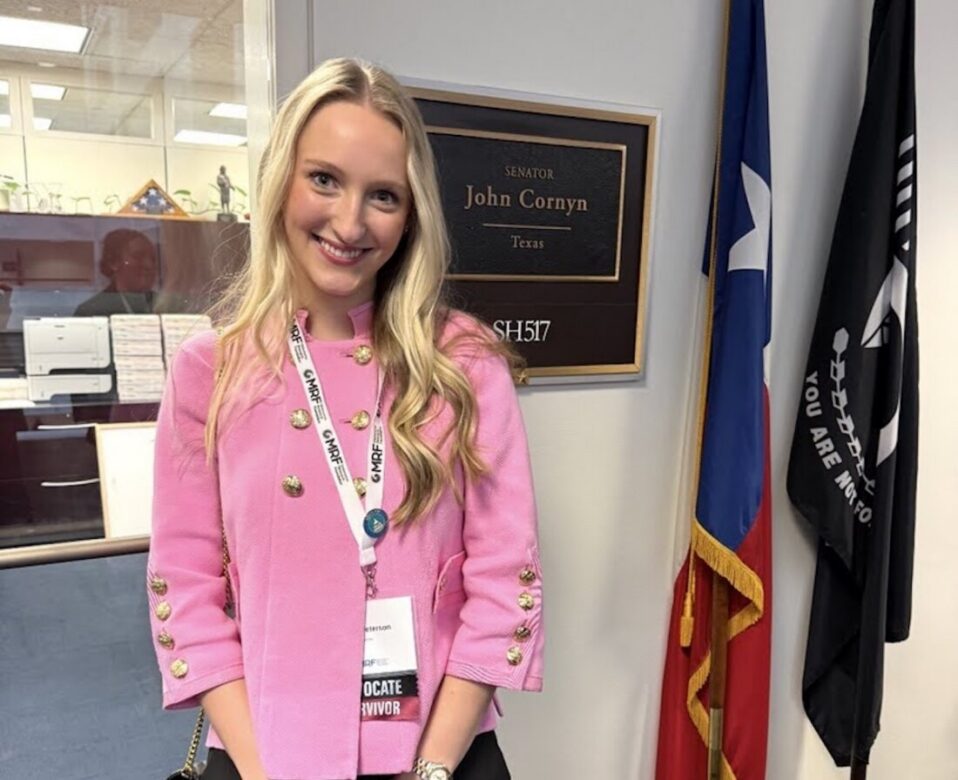
Yes, Babies Can Get Melanoma. A Survivor’s Story (Guest Marit Peterson)
“Don’t worry! Kids don’t get melanoma.” It is a common belief and yet nothing could be further from the truth. Join us for an inspiring chat with 21-year-old Marit Peterson who was diagnosed with melanoma as a tiny baby of 18 months. Now a new college graduate and aspiring dermatologist, Marit shares her story of survival and joy.