

So much has changed in the world of melanoma detection and treatment since Claire was diagnosed as a 14-year-old in 2011. Today, there are better, less toxic treatments and more precise tools available to help detect melanoma and other skin cancers at the very earliest stage.
With the surge in AI, there is plenty of buzz about new and exciting diagnostic technologies today. To sort through it all, we are looking past the hype. What works? What doesn’t when it comes to tech and melanoma?
We tapped into the expertise of one of our top Medical Advisors, Dr. Diane Orlinsky, M.D., Board Certified Dermatologist, Assistant Professor of Internal Medicine at the Johns Hopkins University School of Medicine and a Fellow of the American Academy of Dermatology.
She, and others on our CMF Medical Advisory, recommend above all else, you find your person; your dermatologist. A well-trained medical professional who uses dermascopy to fully examine your naked skin, head to toe, every year. Over time, that dermatologist will know if your moles change and if there are any new ones. That is your baseline of skin health. But there are still new developments to be excited about! Time to dive in!
DecisionDx-Melanoma
A game changer! Created by Castle Biosciences, DecisionDx-Melanoma is a “gene expression profile test that provides comprehensive, personalized results to guide risk-aligned management decisions for patients with stage I-III cutaneous melanoma.” In other words, once a melanoma is diagnosed, DecisionDx-Melanoma captures personal, genetic information from the tumor to predict its aggressiveness and the risk of it spreading further through the body. This insight can offer oncologists the option of avoiding sentinel lymph node biopsies, which can often be quite painful. Dr. Orlinsky gives DecisionDx- Melanoma high marks. “ I look at it as another tool in my tool box”. She says its accuracy helps her best guide her patients in their decisions going forward. DecisionDx-Melanoma is the only melanoma prognostic test associated with improved survival and is highly recommended by patients and professionals.
AI Powered Handheld Scanners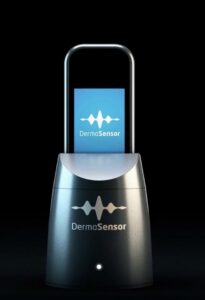
So cool! Devices like DermaSensor are FDA-approved and use spectroscopy and AI to analyze a lesion in seconds and detect the risk of melanoma or other skin cancers. It has proven to be 96% accurate. This is huge news for patients in rural areas with limited access to dermatologists but at great risk for sun damage. What Dr. Orlinsky finds exciting about this is it’s accuracy and the fact that patients in remote areas can get a first look that was never available before. By using DermaSensor, a general practitioner can assess the initial risk of skin cancer or melanoma and then refer the patient to a dermatologist for a final exam using dermoscopy and if needed, biopsy.
3D Body Mapping & Automated Imaging:

Systems like Vectra WB180 use 26 cameras to create a 3D avatar, tracking every mole over time to detect minute changes, which reduces unnecessary biopsies. The challenge to this system is cost. It is too expensive for private dermatologists to utilize and often results in false positives, resulting in patient anxiety and unnecessary biopsies. Additionally, it carries high out-of-pocket costs as insurance may not always cover it. For that reason, Dr. Orlinsky advises skipping this system and finding a dermatologist who uses their own expertise and dermascopy training for annual screenings. She says it also makes it easier to get a second opinion if desired, with consistency and better access.
Non-Invasive Genomic Testing: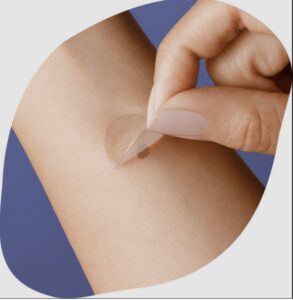
There are two tests on the market under this category. The first is from DermTech.It has created a test that allows doctors to use adhesive patches to collect skin cells from the surface of a patient’s skin or a mole for genetic analysis. The belief is that, with this genomic marker analysis, melanoma can be diagnosed without a surgical biopsy.
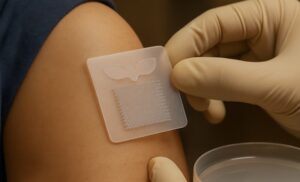 And taking the next step is ExoPatch, currently being tested by researchers at the University of Michigan. This tiny patch has micro needles that capture biomarkers in the top layer of the skin’s epidermis. Researchers say by using this, no biopsy is needed and it can be done at home.
Dr.Orlinsky says the risk with both of these products is that melanoma cells can develop deep within the layers of the skin, beyond what can be detected at the surface. A board-certified dermatologist, equipped with dermoscopic tools, is trained to evaluate cellular patterns that cannot be seen with the naked eye nor detected by an adhesive patch on the skin. If the melanoma is detected at the surface of your skin, you may already have a problem. Remember, if found early, melanoma is 98% treatable. And the “at-home” testing is especially problematic. Never try to diagnose your own skin issues, especially when it comes to cancer. 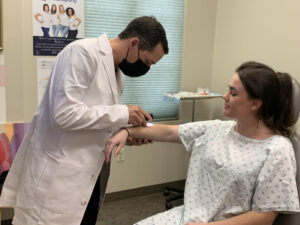
As always, if you have any questions or concerns about your skin, count on your medical team. If you have been diagnosed with melanoma or other skin cancers, make sure your dermatologist, oncologist and other medical professionals are all in the loop. You need a village and a team! It can make all the difference!
Post a comment